Change your
eating habits
A science-based approach to manage your eating habits without shame, willpower, or white-knuckling it. Understand your brain, break the habit loop.

It starts with a small snack...
You are not hungry, exactly. You are tired, stressed, or distracted. Many people struggle with eating habits they do not fully understand. You're not alone. And you are not broken.
Here's what's really happening
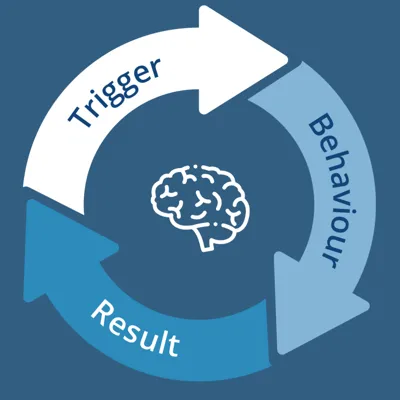
You've developed a habit around eating
Your brain's reward system has learned to associate eating with a moment of relief, comfort, or grounding. Over time, this becomes an automatic behavior: reaching for something to eat every time you feel anxious, lonely, or frustrated.
Your brain is on autopilot. Let's change that.
A new way to break the cycle
Most approaches rely on willpower, avoiding triggers, or substitution.
That may work short-term, but the habit remains.
The Mindshift Method helps you build awareness of the craving before the behavior kicks
in, and reduces the reward value of the habit. This creates new, positive patterns that put you
back in control—no willpower needed.
Video Course
Dr. Jud Brewer and other experts guide you step-by-step, teaching you exactly how your brain creates habits.
Real-Time Tools
In-the-moment practices to help you surf urges, process cravings, and build new neural pathways.
Community Support
Connect with others on the same journey. Live calls every weekday, supportive community, and shared experiences.
Live Zoom Calls
Join 7 live calls a week, every weekday, free with signup. Learn more about the method and practice alongside others on the same journey. Names and cameras are optional.
How to stop emotional and stress eating
Food is different from most habits: you can't quit eating, and you shouldn't try. The Mindshift Method isn't a diet, and there's no list of forbidden foods. It is about learning to tell the difference between your body asking for food and a habit loop asking for comfort, and then responding to each one with care.
Hunger or habit?
When the urge to eat shows up, a few gentle questions can help you see what is driving it:
- When did I last eat?
- Where do I feel this urge? In my stomach, or somewhere else, like my chest or my jaw?
- Would a simple, ordinary meal satisfy me right now, or only one specific food?
- What was I feeling right before the urge appeared? Stressed, tired, bored, lonely?
There are no wrong answers. You're just mapping the loop, which is First Gear. Common eating triggers include the afternoon slump, finishing a stressful task, sitting down in front of the TV, and the quiet of the kitchen late at night.
What the research shows
Dr. Jud Brewer's research group has studied this approach with eating. In one study, 104 women used a smartphone-based mindful eating program, and their self-reported craving-related eating dropped by about 40%. It was an early study without a comparison group, so it's a promising start rather than the final word.
A later analysis looked at what happened each time people used the program's craving tool to pay mindful attention to a craving. The reward people expected from overeating tended to drop with repeated use, and those drops predicted changes in how much they ate. In other words, paying attention helped people's brains update how rewarding overeating really was.
Try this with your next craving
Pause and rate the craving from 1 to 10. Notice where you feel it and what it feels like: tightness, restlessness, a pull. If you decide to eat, eat slowly and pay attention to each bite. Does the fifth bite taste as good as the first? When does your interest start to fade? Then check in again 20 minutes later and notice how your body feels. That is Second Gear: collecting your own data about what the food is really giving you.
For Third Gear, look for a bigger, better offer that meets the real need: rest when you're tired, a short walk when you're restless, a conversation when you're lonely, or a real meal when you're actually hungry.
Kindness keeps the loop from restarting
For many people, the hardest part of emotional eating comes afterward: the guilt, the promises to be "good" tomorrow, the harsh inner voice. That self-criticism adds stress, and stress is often what started the loop in the first place. Try treating a difficult evening as information rather than failure. What triggered it? What did it actually feel like? What might you try next time? Curiosity moves you forward. Shame tends to send you back to the kitchen.
"When we become aware of our habit loops, we can step out of them. Awareness is the first step to freedom."— Dr. Jud Brewer, MD PhD, Author of Unwinding Anxiety
Everything you need to change your eating habits
The Mindshift Recovery app gives you Dr. Jud's complete program—the same science-backed approach used in clinical research at Brown University.
- 30+ video lessons explaining the neuroscience of habits
- In-the-moment tools for when cravings hit
- Daily practices to build new habits
- Progress tracking to see your growth
- Supportive community of peers


Two ways to get started
Choose the path that feels right for you. Both are completely free.
Download our free app
- Complete video course on the science of habits
- Real-time practices when cravings hit
- Tools for stress, social triggers, and emotional patterns
- Supportive community of people on the same path
Join a free live call
- Ask questions and get answers in real-time
- Practice the method with guidance
- Connect with others on the same journey
Frequently asked questions
Diets focus on what and how much you eat. The Mindshift Method focuses on why you eat when you're not hungry. By understanding and working with your brain's reward system, you can reduce emotional eating and food cravings at a neurological level. Studies show a 40% decrease in cravings.
Yes. Binge eating, emotional eating, stress eating, and other problematic eating patterns all follow similar habit loops. Our tools help you become aware of the urges that drive these behaviors and reduce their power over time.
Yes. As a 501(c)(3) nonprofit, our mission is to make evidence-based tools accessible to everyone. The app, our live online calls, and many of our resources are completely free.
Absolutely. The Mindshift Method complements therapy, eating disorder treatment, and nutritional programs. Many people find that understanding the habit loop side of their eating enhances other treatments.
Most approaches rely on willpower or restriction, which can actually increase cravings. The Mindshift Method takes a different approach: it works with your brain's reward system rather than against it, creating sustainable change without the constant struggle.

Reclaim Your Life
You do not need more pressure to change your eating habits. By learning how urges, judgment, and the nervous system interact, you can respond differently and build change that is more compassionate and sustainable over time.